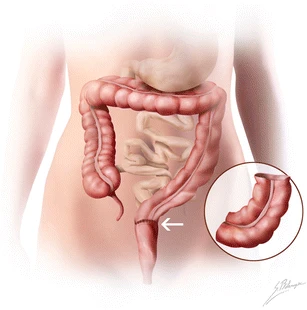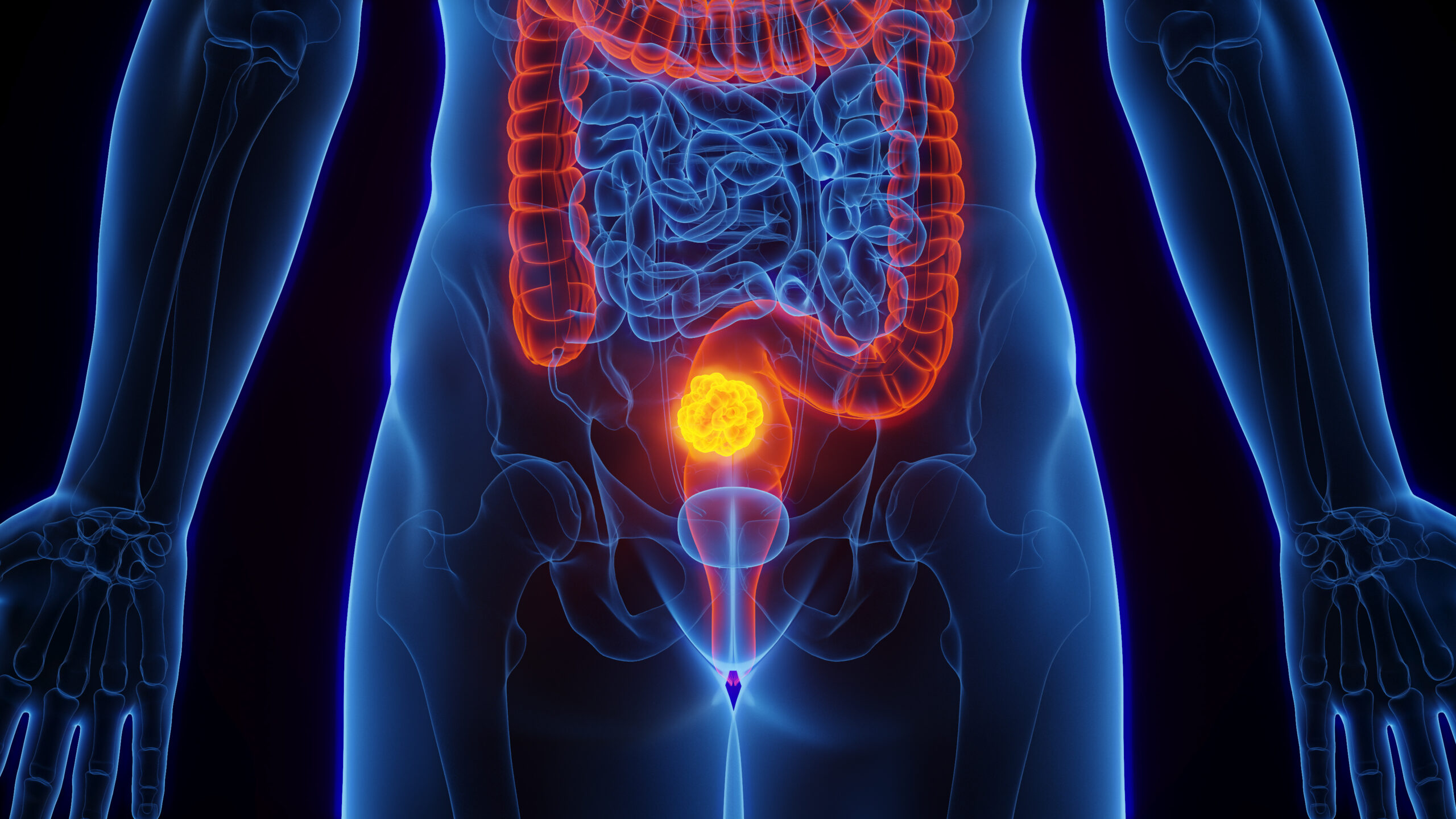
Rectal cancer (also called rectum cancer) is a cancer that starts in the rectum, the last part of the large intestine, where stool is held before it is passed out through the anus. This page explains the symptoms of rectal cancer, how it is diagnosed, the surgical and non-surgical treatment options, and what to expect with a stoma.

By Dr Kaushal Yadav, MS, MCh (Surgical Oncology), Director, Surgical Oncology, Max Hospital, Gurgaon. Practising in Gurugram, Haryana. Last updated: 4 November 2026. Educational information, not medical advice.

What does the rectum do? The rectum is the last part of the large intestine, about 12 cm (5 inches) long. It stores stool until you are ready to pass it, senses when it is full and, together with the anal sphincter muscles, helps you control when you go.

What are the parts of the rectum and anus? The rectum is described as upper, middle and lower thirds. It ends at the anal canal, which is closed by two sphincter muscles: the internal anal sphincter (not under voluntary control) and the external anal sphincter (under voluntary control). The levator ani muscles form the pelvic floor around the rectum. A cancer in the lower rectum lies close to these muscles, which is why its position matters when surgery is planned.

Most of the rectum lies deep in the pelvis. Nutrients are absorbed in the small intestine, the remaining residue reaches the colon where water is absorbed, and the formed stool is held in the rectum until it is passed. Understanding the anal sphincter is very important in the management of rectal cancer and in deciding whether a colostomy or permanent stoma can be avoided.

Colorectal cancers together are the 3rd most common cancer and the 2nd most common cause of cancer-related deaths globally. According to the GLOBOCAN India fact sheet (2024 estimates), colorectal cancer is the 4th most common cancer in India by new cases and the 7th most common cause of cancer-related deaths.

  • Adenocarcinoma: The vast majority of colon and rectal cancers are adenocarcinomas. This type of cancer develops from the cells that line the inside of the colon and rectum.
  • Other types: these include neuroendocrine tumours, which develop from hormone-producing cells, and gastrointestinal stromal tumours (GISTs), which develop from connective tissue cells in the GI tract.
Causes and Risk Factors of Rectal Cancer
  • Age: the risk rises with age, and most colorectal cancers are diagnosed after the age of 50. Rectal cancer is also being diagnosed more often in younger adults in some countries, including the United States (American Cancer Society), so symptoms that persist should be checked at any age.
  • Personal or family history of colorectal cancer or polyps. Having had colon cancer or noncancerous growths called polyps in the past, or having a close relative with them, increases the risk of colorectal cancer.
  • Diet: a diet high in fat and low in fibre can increase your risk of rectal cancer. The International Agency for Research on Cancer (IARC) classifies processed meat as carcinogenic to humans (Group 1) and red meat as probably carcinogenic (Group 2A), based mainly on evidence for colorectal cancer (IARC, 2015).
  • Smoking: smokers are more likely to develop rectal cancer than non-smokers.
  • Alcohol: heavy drinkers are at an increased risk of developing cancer of the large intestine.
  • Obesity: people who are obese have an increased risk of developing rectal cancer.
  • Being physically inactive or sedentary
  • Abdominopelvic radiation exposure
  • Genetic mutations. Some inherited conditions, such as familial adenomatous polyposis (FAP) and Lynch syndrome, can cause changes in the DNA of the cells in the colon that make them more likely to become cancerous.Risk factors of Rectum cancer. Causes of colorectal cancer

*A diet rich in fruits, vegetables, whole grains and fibre, and low in red meat, processed meat and sugary drinks, probably lowers risk.

Screening for Rectal and Colorectal Cancer

Screening of Colorectal Cancer for early detectionThe American Cancer Society recommends that people at average risk start regular screening at age 45. This can be done with a stool-based test that detects blood, or with a colonoscopy. People in good health should continue regular colorectal cancer screening up to age 75. Between ages 76 and 85, screening should be based on the person’s preferences, overall health and prior screening history. Beyond the age of 85, screening is usually not recommended.

Usually recommended tests are:

  • Stool tests: Fecal Immunochemical Test (FIT) & Fecal Occult Blood Test (FOBT) – a stool-based test once a year can decrease colorectal cancer mortality by 30%.
  • Colonoscopy: an endoscopic examination to check the inside of the large intestine. Colonoscopy once every 10 years decreases colorectal cancer-related mortality by 50%.
  • CT colonography (virtual colonoscopy) every 5 years, for people who do not opt for colonoscopy.
  • Flexible sigmoidoscopy every 5 years.

People at high risk, or with a family history of colon or rectal cancer, are advised to start screening earlier and to repeat it more often, on the advice of the treating colorectal cancer surgeon.

Symptoms of Rectal Cancer: Signs to Discuss with a Doctor

Symptoms of rectal and colon cancer

  • Rectal bleeding: the most common symptom of colorectal cancer is bleeding from the rectum or blood in the stool.
  • A change in bowel habits, such as diarrhoea, constipation, or narrowing of the stool
  • Pain in the lower abdomen
  • Weakness and fatigue
  • Unexplained weight loss
  • Urge to pass stool but unable to pass it
  • Urinary difficulty in case of bulky disease

Many of these symptoms are also caused by piles (haemorrhoids), anal fissures or infections, so they do not by themselves mean cancer. Bleeding that keeps coming back, blood mixed with the stool, or a change in bowel habit that lasts for more than a few weeks should be examined by a doctor, who may advise a rectal examination and a colonoscopy, rather than assuming it is piles.
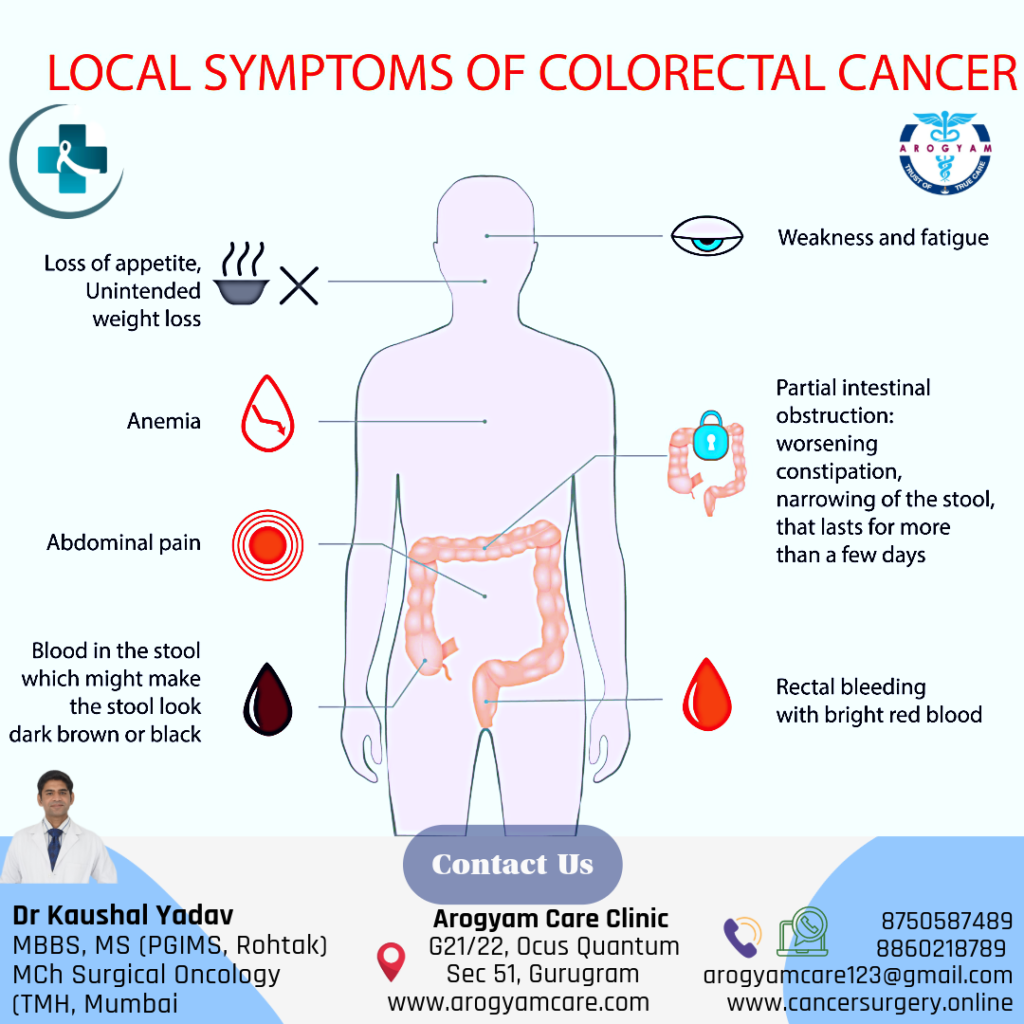
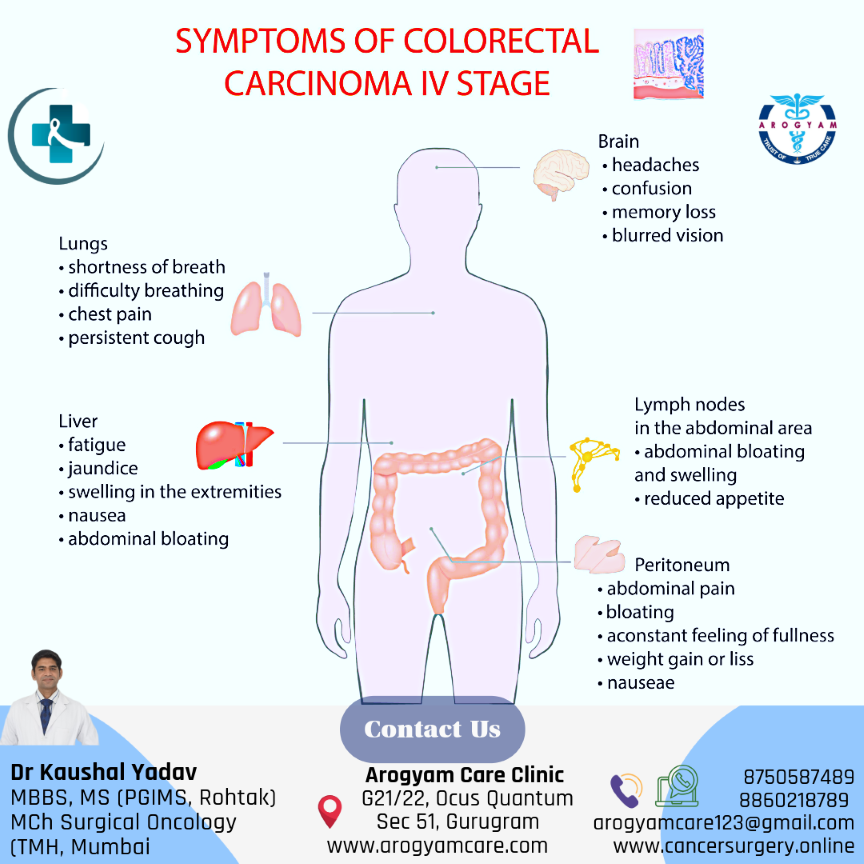
Symptoms of colorectal cancer. How to identify rectum cancer
Symptoms of stage IV (advanced) colorectal cancer
How Rectal Cancer Is Diagnosed: Tests and Scans


  • Physical examination: The doctor will ask about your medical history and perform a physical examination, including a digital rectal examination. This is the main assessment to determine the distance between the tumour and the anal sphincter.
  • Colonoscopy: This uses a long, flexible tube with a camera and a light at the end (colonoscope) to examine the inside of your colon and rectum. The doctor can also take tissue samples (biopsies) or remove polyps (growths) during this test. The tissue samples are sent to a lab to be checked for cancer cells.
  • Biopsy: a small piece of tissue is removed from the tumour or polyp and examined under a microscope. A biopsy confirms the diagnosis of rectal cancer. The biopsy sample can also be tested for mismatch-repair (MMR) or microsatellite instability (MSI) status, which helps decide whether immunotherapy may be an option.
    Colonoscopy: a flexible camera tube is used to examine the rectum and colon
  • Blood tests: These include carcinoembryonic antigen (CEA), a tumour marker that may be higher than normal in people with this disease. CEA is used mainly to monitor treatment and follow-up and cannot diagnose cancer on its own.
  • Imaging tests: MRI / CT scan / PET-CT: Imaging tests show the size and location of the rectal tumour and whether it has spread to nearby or distant organs. An MRI of the pelvis shows how deep the tumour is and how close it is to the sphincter muscles and to the layer around the rectum (the mesorectal fascia). Based on the relation of the tumour to the anal sphincters and levator ani muscles, it is decided whether a sphincter-saving operation is possible.
Rectal Cancer Treatment: Surgery, Chemotherapy and Radiation


Surgery is the most common treatment for rectal cancer. It involves removing the part of the rectum that contains the cancer, along with some surrounding normal tissue and lymph nodes. The standard technique, total mesorectal excision (TME), removes the rectum together with the fatty tissue and lymph nodes around it as one intact package. The type of operation depends on the position, size and stage of the tumour.

Treatment before surgery (neoadjuvant therapy): For many people with stage II or III (locally advanced) rectal cancer, radiation and/or chemotherapy is given before surgery to shrink the tumour. This can make the cancer easier to remove. Whether it is advised depends on the stage and the MRI findings, and the plan is best made by a multidisciplinary team (National Cancer Institute).

Sphincter Sparing Approaches: Sphincter-sparing approaches aim to preserve the anal sphincter function while removing the tumour in the rectum. The goal is to avoid the need for a permanent colostomy, which is a surgical opening in the abdominal wall for the diversion of faeces. These operations become more complex as the cancer lies lower in the rectum. Several sphincter-sparing surgical approaches are available, including:

  1. Transanal Endoscopic Microsurgery (TEM): TEM is a minimally invasive technique performed through the anus using an endoscope and specialised instruments. It is suitable only for selected small, early-stage tumours in the lower part of the rectum.
  2. Low Anterior Resection (LAR): The cancer-bearing segment of the rectum, with an adequate margin of normal tissue around the cancer, is removed along with nearby lymph nodes and the other tissues around the rectum. The colon is then joined to the remaining rectum so that stool can pass through the bowel in the usual way.
  3. Ultralow Anterior Resection (ULAR): The cancer in the lower rectum is removed while the anal sphincter is preserved. The colon is then joined to the anal canal.

A short-term temporary stoma may be made in frail patients or when the join (anastomosis) is difficult. The end of the intestine is brought out through a hole in the skin of the abdomen. This gives the rectum time to heal before stool moves through it. Most such stomas are reversed (the intestines are reconnected) after adequate healing.

Bowel function after sphincter-sparing surgery: Bowel habits often change after LAR and ULAR. Common problems are more frequent stools, urgency and passing stool in several small amounts. This group of symptoms is called low anterior resection syndrome (LARS). It is common after sphincter-preserving surgery and can be eased with pelvic floor (Kegel) exercises, diet changes and other treatments, but it can be troublesome for some people (Bhattacharyya et al., Cureus 2025).

  1. Intersphincteric resection: In very low-lying cancer, when the external anal sphincter and the levator ani muscle are free of disease and have adequate strength, and a clear margin can be taken at the lower end, the internal sphincter is removed with the tumour and the colon is joined to the anal canal. A temporary stoma is needed and is reversed after the join has healed.
  2. Proctocolectomy with ileo-anal anastomosis: When there are multiple tumours or polyps in the colon and rectum, the whole colon and rectum are removed and the small intestine is joined to the anal canal.


Not every patient with rectal cancer is a candidate for sphincter-sparing surgery. The decision depends on the stage and location of the tumour, the patient’s overall health and the surgeon’s experience. People with a diagnosis of rectal cancer should discuss the treatment plan with a surgical oncologist or a multidisciplinary tumour board.


Abdominoperineal Resection with Permanent Stoma: Cancer of the lower part of the rectum, or extending into the anal canal, growing into the sphincter muscle (the muscle that keeps the anus closed and prevents stool leakage) or the pelvic floor (levator muscles). It is also required in low rectal cancer when sphincter muscle strength is poor.

A well-managed stoma can give a better quality of life than uncontrolled leakage of stool.


Metastasectomy: if colon or rectal cancer has spread to a limited number of organs, such as the liver or lung, and complete excision of the metastasis is possible.

Cytoreductive surgery + Hyperthermic Intraperitoneal Chemotherapy (CRS + HIPEC): when the spread is only to the peritoneum (the inner covering of the abdomen), extensive surgery is done to remove the visible disease completely, followed by heated chemotherapy placed inside the abdomen during surgery.

Parts of the Rectum and Anal Sphincters
Anterior Resection: Upper and Middle rectum removed and colon joined with lower rectum
Total Proctocolectomy
APR Surgery: Abdominoperineal resection with permanent Colostomy
Abdominoperineal Resection with Permanent Stoma

Arogyam Care Clinic: Address and Phone

Chemotherapy, Radiation Therapy and Other Treatments
  • Chemotherapy: is the use of drugs to kill cancer cells or stop them from growing. It can be given before or after surgery, or along with radiation therapy. Chemotherapy can help shrink the tumour before surgery, lower the risk of the cancer coming back after surgery, or treat cancer that has spread to other parts of the body. The most common chemotherapy drugs used for rectal cancer are 5-fluorouracil (5-FU) and capecitabine (Xeloda). They are often given with a drug called leucovorin, which helps them work better.
  • Radiation therapy is the use of high-energy rays or particles to destroy cancer cells or stop them from growing. It can be given before or after surgery, or along with chemotherapy (chemoradiation). Radiation therapy can help shrink the tumour before surgery and lower the risk of the cancer coming back in the pelvis.
  • Targeted therapy: has an important role in advanced or metastatic disease, where medicines act on specific targets (receptors) on cancer cells.
  • Immunotherapy: acts on the immune checkpoints of cells. It is an established option for advanced colorectal cancers that are mismatch-repair deficient (dMMR) or MSI-high, and its use in earlier-stage rectal cancer is being studied (emerging evidence).

Stoma (Colostomy and Ileostomy): What to Expect

  • Stoma bag after Colostomy stoma for rectum cancer surgeryStomas are surgically created openings in the abdominal wall that allow the diversion of faeces or urine when the normal route of elimination is not possible. The two main types of stomas related to the digestive system are colostomy and ileostomy, and they can be either permanent or temporary, depending on the underlying medical condition and the planned surgical approach.

     Colostomy: A colostomy is a surgical procedure in which a portion of the colon (large intestine) is brought to the surface of the abdomen to create a stoma. The end of the colon is then connected to the stoma, allowing stool to pass directly from the colon out of the body through the stoma.

    • End Colostomy: The stoma is created from the proximal end of the colon, and the distal part is either removed or sewn shut. Stool consistency depends on the location of the stoma, with end colostomies closer to the rectum producing more formed stool.
    • Loop Colostomy: In this type, a loop of the colon is brought to the abdominal surface. A temporary opening is created in the loop to allow stool to pass

     Ileostomy: An ileostomy involves bringing the end of the small intestine (ileum) to the abdominal surface to create a stoma. This allows the elimination of stool from the small intestine directly through the stoma.

    Temporary and Permanent:

    Permanent Stoma: is done when the lower part of the colon or the rectum is removed and anal sphincters are weak or removed.

    Temporary stoma: is done when the lower part of the colon or the rectum needs time to heal after an injury, infection, inflammation, or surgery. A temporary stoma can be reversed by reconnecting the bowel ends.

How to Care for a Stoma: Self-care Guide
  1. Colostomy careStoma Care:

   – Keep the stoma area clean and dry. Gently wash with warm water and a soft cloth during bathing. Avoid using soap, alcohol, or other harsh chemicals directly on the stoma.

    – Observe the stoma regularly for any changes in size, color, or appearance. Report any unusual findings to your healthcare provider.

   – Use a stoma powder or skin barrier wipe, if necessary, to protect the skin around the stoma from irritation.

  1. Ostomy Pouch Management:

   – The stoma will continuously produce stool or mucus (in the case of colostomies), or liquid stool (in the case of ileostomies). These waste materials are collected in an ostomy pouch that adheres to the skin around the stoma.

   – Empty the pouch when it is about one-third to one-half full to prevent it from becoming too heavy or causing leakage.

   – Replace the pouching system regularly, following the instructions provided by the manufacturer or healthcare provider.

   – Consider using specialized pouches for activities like swimming or other physical activities to ensure a secure fit.

  1. Diet and Hydration:

   – Drink plenty of fluids and eat a balanced diet to keep your stools soft and regular. Regulate foods that can cause gas, odor, diarrhea, or constipation, such as beans, cabbage, broccoli, spicy foods, dairy products, nuts, seeds, popcorn, etc.

– Chew your food well and avoid swallowing air when you eat or drink. This will help prevent gas and bloating.

– Be active and exercise regularly to improve your blood circulation and digestion. You can do most activities with a stoma as long as you are careful and comfortable.

In conclusion, having a stoma can change your life in many ways, but it does not have to stop you from living well. By learning about the different types of stomas and how to take care for them, you can manage your condition and enjoy your daily activities. Remember that you are more than your stoma and that you can still do the things you love with some adjustments and precautions. If you have any questions or concerns about your stoma, do not hesitate to contact your doctor or nurse for guidance and advice.

Related Video

Frequently Asked Questions About Rectal Cancer

Colon cancer can start anywhere in the colon, which is about 5 feet long and absorbs water from the stool. Rectal cancer begins in the rectum, which is the last 12 cm (about 5 inches) of the large intestine. This is where the body defecates until you have a bowel movement. Contact Cancer Surgery clinic Arogyam Care at Gurugram, Delhi NCR or book online appointment for colon and rectal cancer treatment in Gurgaon.
  • If all relavant examination and investigations has been done than plan of treatment is finalized with colon cancer surgeon
  • After deciding surgical procedure cost estimate can be taken from billing department or hospital. Clinic or hospital department coordinator will assist in case any help required. +918750587489,
Best Doctor for Rectal Cancer in Gurgaon says for rectal cancer, the overall 5-year survival rate for people is 67%. If the cancer is diagnosed locally, the survival rate is 89%. If the cancer has spread to surrounding tissues or organs and / or regional lymph nodes, the 5-year survival rate is 72%
It is 10 times more likely to cause stomach cancer than rectal cancer, where it returns after treatment has begun. Stomach cancer has about a 20 percent risk of local recurrence, versus about 2 percent with colon cancer. Contact Dr Kaushal Yadav for Cancer Surgery & for colon and rectal cancer treatment in Gurgaon, Delhi-NCR, India

Even in lowest of rectum cancer it is possible to preserve normal function. Requirement is that external sphincter (levator ani muscle) plane is safe and sphincters have good strength. Lowest margin during surgery is confirmed as negative for cancer cells on frozen section.

Lower the rectum cancer, more are chances of stoma (Colostomy/ ileostomy). In most cases stoma is temporary and usually closed after healing. In cases when sphincter is involved by disease, poor strength of muscles or disease is very bulky and negative margins not achievable than, permanent stoma is made after removing all pelvic disease.

Related reading on this site:

Sources:

  1. American Cancer Society. Colorectal cancer survival rates (SEER data, 2014–2020).
  2. American Cancer Society. Surgery for rectal cancer.
  3. National Cancer Institute. Rectal cancer treatment (PDQ), patient version.
  4. Bhattacharyya S, et al. Low anterior resection syndrome: current understanding and management. Cureus 2025. DOI.
  5. Feeney G, et al. Neoadjuvant radiotherapy for rectal cancer management. World J Gastroenterol 2019;25:4850-4869. DOI.
  6. IARC. IARC Monographs evaluate consumption of red meat and processed meat (2015).
  7. American Cancer Society. Rectal cancer incidence rising as colorectal cancer shifts toward younger generations.
  8. American College of Gastroenterology. Colorectal cancer screening guideline (2021).
  9. American Academy of Family Physicians. Colorectal cancer screening (2022).
  10. IARC. GLOBOCAN India fact sheet (2024 estimates).

Dr Kaushal Yadav, MS, MCh (Surgical Oncology), consults at Arogyam Care Clinic, G-21/22 Ocus Quantum Mall, Sector 51, Gurugram, Haryana 122003. Phone: 9911168762.

This page is for education only and is not a substitute for medical advice. Discuss your own reports with your doctor. Survival figures quoted on this page are from US cancer registries and cannot predict an individual’s outcome.

Submit Your Query Here & We'll Get Back

Arogyam Care Clinic: Address and Phone

Call Now Button