
Breast Cancer: Symptoms, Screening, Tests and Surgery

By Dr. Kaushal Yadav, MS, MCh (Surgical Oncology), Director, Surgical Oncology, Max Hospital, Gurgaon · Last reviewed 23 October 2026 · Education only
The breasts are milk-producing glands. Lymph vessels carry a clear fluid called lymph into small bean-shaped structures called lymph nodes, which contain immune cells. The lymph vessels of the breast drain mainly into the lymph nodes in the armpit (axilla).
Breast cancer is a cancer that starts in the cells of the breast. A malignant tumour can invade nearby tissue and spread to other organs. Most breast lumps are benign, which means they stay within the breast tissue and do not spread to other parts of the body. Breast cancer can also occur in men, although this is rare.
Breast cancer is the most common cancer in women worldwide[1], and the Indian Council of Medical Research (ICMR) describes it as the most common female cancer in urban India[3].
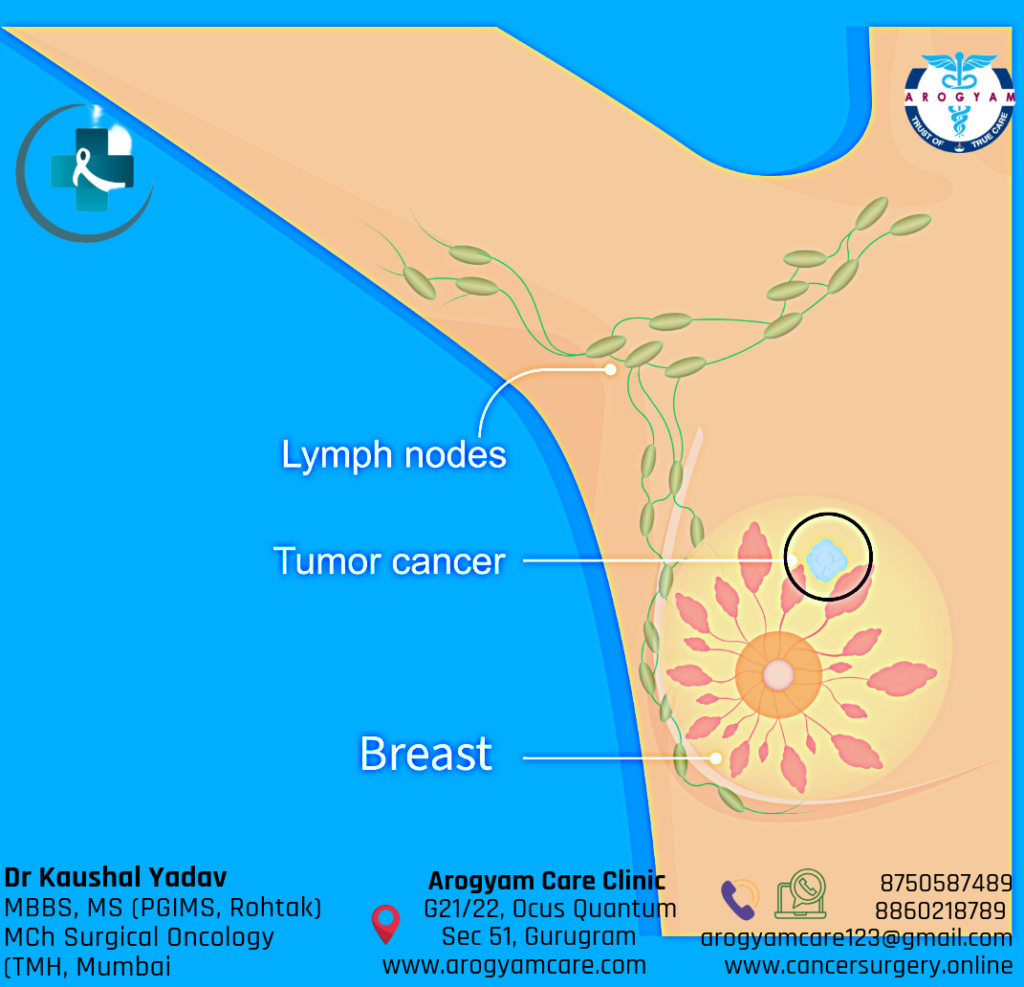
Types of breast cancer
Non-invasive breast cancer:
- Ductal carcinoma in situ (DCIS): This is a non-invasive type of breast cancer, meaning it stays within the ducts and does not spread. It is sometimes called a pre-cancer because it can develop into invasive cancer if left untreated.
- Lobular carcinoma in situ (LCIS): This is also a non-invasive condition, meaning it stays within the lobules and does not spread. It is not considered a true cancer, but it is a risk factor for developing invasive cancer in the future.
Invasive breast cancer:
- Invasive ductal carcinoma (IDC): This is the most common type of breast cancer, accounting for about 80% of all cases. It starts in the cells lining the ducts and can spread to other parts of the breast or other organs.
- Invasive lobular carcinoma (ILC): This type accounts for about 10% of all cases. It starts in the cells of the lobules and can also spread to other parts of the breast or other organs. Invasive lobular carcinoma is a risk factor for bilateral breast cancer.
Inflammatory breast cancer: This is a rare and aggressive type of breast cancer that causes the breast to become red, swollen and inflamed. It accounts for about 1-5% of all cases.
Paget’s disease of the nipple: This is a rare type of breast cancer that affects the skin of the nipple and the areola (the dark circle around the nipple). It accounts for about 1-4% of all cases.
Angiosarcoma: This is a very rare type of breast cancer that starts in the blood vessels or lymph vessels of the breast. It accounts for less than 1% of all cases.
- Other types: mucinous carcinoma, mixed carcinoma and phyllodes tumours.
Risk factors for breast cancer
- Age – Most cases occur after 50 years, but a rising number of cases are being seen in the 30-40 years age group in India.
- Gender – Being female is a risk factor for breast cancer.
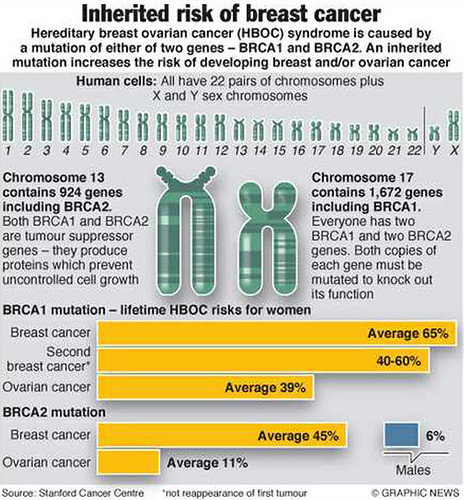
- Genetic – Women who have certain mutations in the BRCA1 and BRCA2 genes have a higher chance of developing breast cancer, ovarian cancer, or both.
 “The Inherited Risk of Breast and Ovarian Cancer” by DES Daughter is licensed under CC BY-NC-SA 2.0
- Family history – If a woman in the family has had breast cancer, the risk for other family members is higher.
- Obesity or being overweight
- Menstrual history – Having the first period before age 12 and late menopause increase the risk of breast cancer.
- Pregnancy – Never having been pregnant is a risk factor for breast cancer. A first child after 35 years also increases the risk compared with earlier childbearing.
- Alcohol
- Hormone replacement therapy for long periods
- Radiation exposure
- Certain benign breast conditions, such as atypical ductal or lobular hyperplasia
- A first pregnancy before 30 years, breastfeeding and regular physical activity are considered protective factors.
ब्रेस्ट कैंसर के कारण और जोखिम कारक (Risk factors in Hindi)
ब्रेस्ट कैंसर का कोई एक कारण नहीं होता। बढ़ती उम्र, परिवार में ब्रेस्ट या ओवरी कैंसर का इतिहास, BRCA1/BRCA2 जैसे जीन में बदलाव, मोटापा, शराब, लंबे समय तक हार्मोन रिप्लेसमेंट थेरेपी, पहला पीरियड 12 साल से पहले आना, मेनोपॉज़ देर से होना और पहला बच्चा 35 साल के बाद होना जोखिम बढ़ा सकते हैं। 30 साल से पहले पहली गर्भावस्था, स्तनपान और नियमित शारीरिक गतिविधि को सुरक्षात्मक माना जाता है।
Screening for breast cancer
1) Mammography – The American Cancer Society (ACS) guideline for women at average risk[5] recommends:
- Women 40-44 years: should have the opportunity to begin annual screening mammograms.
- Women 45-54 years: should have a screening mammogram every year.
- Women 55 years and older: can move to a mammogram every two years, or continue yearly mammograms, for as long as their overall health is good.
The World Health Organization describes population screening as mammography in apparently healthy women, usually aged 50-69 years.[2] Women at higher risk, for example with a strong family history or a known BRCA mutation, may be advised to start earlier and screen more often. This should be decided together with your treating doctor.
2) Breast awareness and self-examination: Knowing how your breasts normally look and feel helps you notice a change early. Breast self-examination is easy to learn, but it does not replace mammography or a doctor’s examination. Report any new lump or change to a doctor.
Method –
- Use the pads of your fingers in a rolling motion over all parts of both breasts. This can be done at the time of a bath or shower.
- Stand in front of a mirror with both arms by the side of the body
- Look in the mirror with both hands on the hips
- Look in the mirror with both arms raised above the head
- Feel behind the nipple
3) MRI: advised in people with a genetic predisposition or very high risk, starting at a younger age.
ब्रेस्ट कैंसर की जांच और स्क्रीनिंग (Breast cancer screening in Hindi)
मैमोग्राफी (स्तन का कम-डोज़ एक्स-रे) स्क्रीनिंग की मुख्य जांच है। अमेरिकन कैंसर सोसाइटी (ACS) के अनुसार औसत जोखिम वाली महिलाओं में 45 से 54 वर्ष तक हर साल और 55 वर्ष के बाद हर दो साल में मैमोग्राफी की सलाह दी जाती है; 40 से 44 वर्ष की महिलाएं चाहें तो सालाना जांच शुरू कर सकती हैं। परिवार में कैंसर का इतिहास हो या BRCA जैसा जीन बदलाव हो, तो जांच जल्दी और ज़्यादा बार करने की ज़रूरत हो सकती है। यह अपने डॉक्टर के साथ तय करें।

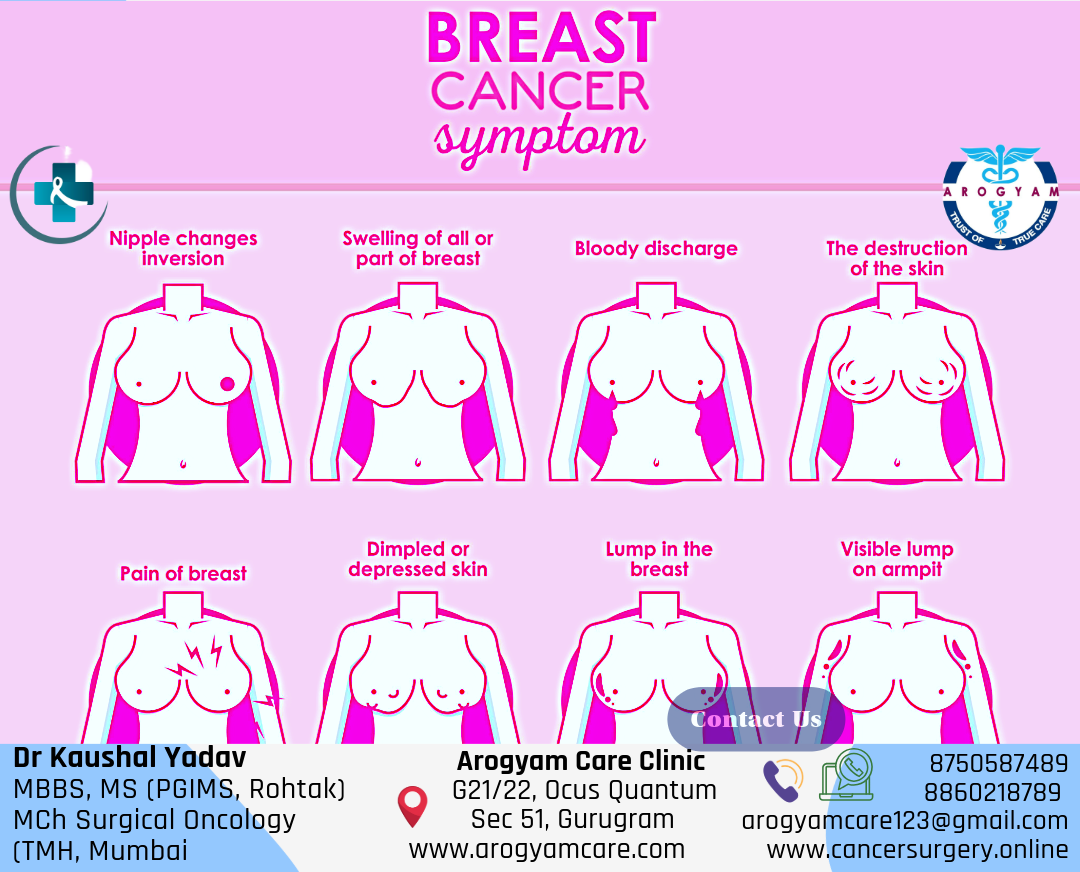
Symptoms and warning signs of breast cancer
Lump – the most common symptom. A lump usually appears in the breast, but it can also be felt in the armpit (axilla) because of enlarged lymph nodes.
Dimpling of the breast skin
Sunken or inverted nipple
Redness or scaling of the skin of the breast, nipple or areola
Discharge from the nipple, especially if blood-stained
Pain or an ulcer over the tumour
Symptoms caused by spread to other organs, such as weight loss, bone pain, headache or breathlessness
If you notice any of these changes, do not panic, but do not ignore them. Most breast lumps and changes are not cancer, but any new lump or change should be checked by a doctor. Finding breast cancer earlier and treating it promptly is associated with lower mortality.[2] Outcomes depend on the type and stage of the cancer, and many women live for many years after treatment. Knowing how your breasts normally look and feel makes it easier to notice a change.
ब्रेस्ट कैंसर के लक्षण (Breast cancer symptoms in Hindi)
- स्तन या बगल (armpit) में गांठ – यह सबसे आम लक्षण है
- स्तन की त्वचा में गड्ढा या सिकुड़न (dimpling)
- निप्पल का अंदर की ओर धंस जाना, या निप्पल से खून मिला स्राव
- स्तन या निप्पल की त्वचा पर लालिमा, पपड़ी या छिलका
- स्तन के आकार या बनावट में बदलाव
ज़्यादातर गांठें कैंसर नहीं होतीं, लेकिन कोई भी नई गांठ या बदलाव दिखे तो घबराएं नहीं और उसे अनदेखा भी न करें; किसी डॉक्टर से जांच करवाएं। यह जानकारी केवल शिक्षा के लिए है।
Tests (investigations) for breast cancer
Mammography – uses a low-dose X-ray to show the location of a tumour within the breast and to check the opposite breast.

Ultrasound: works better in younger women (<35 years)
MRI: gives detailed images of breast tissue in selected cases, for example in high-risk or young patients, or when other tests are unclear
Biopsy: confirms the diagnosis and shows the type and characteristics of the cancer
CECT / bone scan / PET-CECT: to look for spread to distant organs and to find the extent of the disease (staging)

Treatment of breast cancer
Surgery – Surgery is the mainstay of treatment for breast cancer that has not spread to distant organs. The operations below are used depending on the type and stage of the cancer, the size and position of the tumour and the person’s overall health.[3][4]
- Wide excision / lumpectomy: The tumour is removed along with a margin of normal surrounding tissue. Wide excision alone is sufficient for benign tumours of the breast. Benign phyllodes tumours need a much wider resection margin of 2-3 cm.
- Simple mastectomy: The breast tumour is removed along with the whole breast tissue and the nipple-areola complex. The axilla is not addressed in this operation. It is usually done for ductal carcinoma in situ and phyllodes tumour.
- Modified radical mastectomy: The breast with the tumour, at appropriate margins, and the nipple-areola complex are removed along with axillary lymph node dissection. 10-15 axillary lymph nodes are considered adequate as per the guidelines. All stations of lymph nodes (I-III) suspected of having disease should be removed. Most commonly done surgery for breast cancer.
- Breast conservation surgery: As the understanding of tumour biology and the available technology improve, cancer surgery has improved to give more and more functional results. Patient selection plays a very important role. A suitable tumour is removed together with surrounding breast tissue, with negative margins. The axillary lymph nodes are assessed or removed as standard.
Breast conservation surgery or mastectomy? In two randomised trials with 20 years of follow-up, the NSABP B-06 trial and the Milan trial, long-term survival was similar after breast-conserving surgery with radiotherapy and after mastectomy.[6][7] In the Milan trial (tumours up to 2 cm), the cancer returned in the same breast in 8.8% of women after breast-conserving surgery with radiotherapy and in 2.3% after radical mastectomy, which is why radiotherapy is part of breast-conserving treatment.[7] Which operation is suitable depends on the individual and should be decided with your surgeon.
Recent advances include:
- Sentinel lymph node biopsy: The sentinel lymph node is the first lymph node that drains a breast tumour. Usually a radioactive tracer is injected around the tumour before surgery and blue dye is injected into the breast tissue at the time of surgery. A gamma probe identifies the radioactive node, which is removed and sent for frozen-section examination during the operation. If tumour cells are absent, the higher axillary lymph nodes do not need to be removed. If tumour cells are found, complete axillary surgery is done.
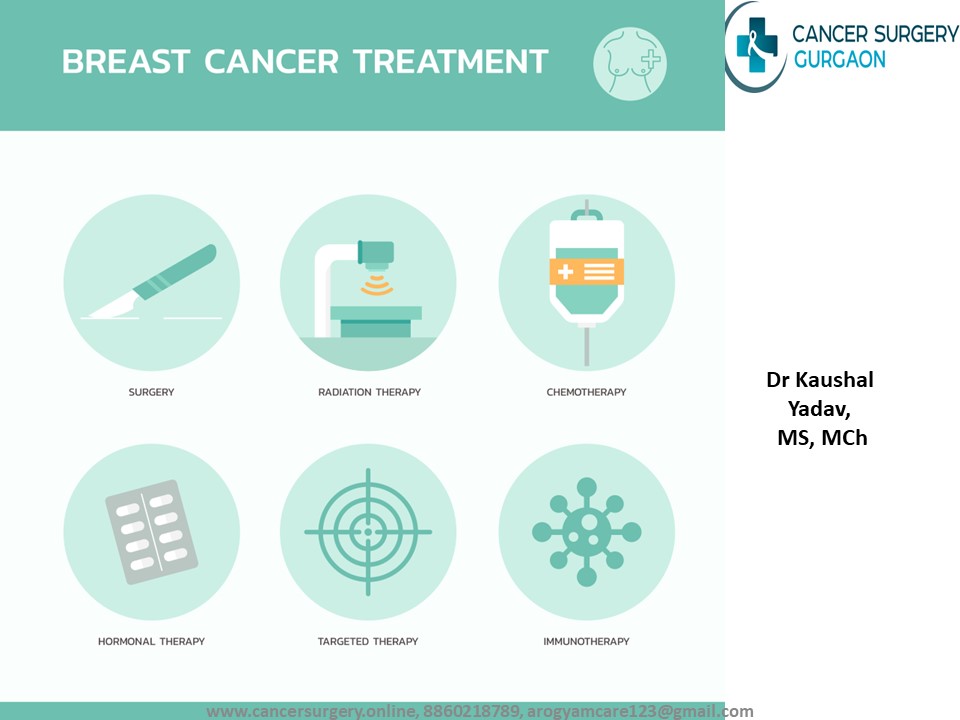
- Skin-sparing mastectomy and immediate breast reconstruction: aims to preserve body image.
ब्रेस्ट कैंसर का इलाज और सर्जरी (Breast cancer treatment in Hindi)
ब्रेस्ट कैंसर के इलाज में सर्जरी एक अहम हिस्सा है। कौन-सा ऑपरेशन उचित है, यह कैंसर के प्रकार और स्टेज, गांठ के आकार और मरीज़ की सेहत पर निर्भर करता है। मुख्य ऑपरेशन हैं: लम्पेक्टॉमी या ब्रेस्ट कंज़र्वेशन सर्जरी (गांठ और आसपास का थोड़ा स्वस्थ ऊतक निकालना, आमतौर पर रेडिएशन के साथ) और मास्टेक्टॉमी (पूरा स्तन निकालना)। ज़रूरत के अनुसार कीमोथेरेपी, हार्मोन थेरेपी, टार्गेटेड थेरेपी और रेडिएशन थेरेपी भी दी जाती हैं। इलाज की योजना आपके इलाज करने वाले डॉक्टरों की टीम तय करती है।
Where Dr Kaushal Yadav consults
Dr Kaushal Yadav, MS, MCh (Surgical Oncology), is a surgical oncologist who sees patients with breast and other cancers.
- Gurugram: Arogyam Care Clinic, G-21/22 Ocus Quantum Mall, Sector 51, Gurugram. Phone: 9911168762.
- Rewari (Haryana): OPD. Phone: 9911168762.
Approximate road distance to Sector 51, Gurugram: from Rewari about 55 km (around an hour); from Agra roughly 200-230 km (3 to 4 hours, depending on traffic).
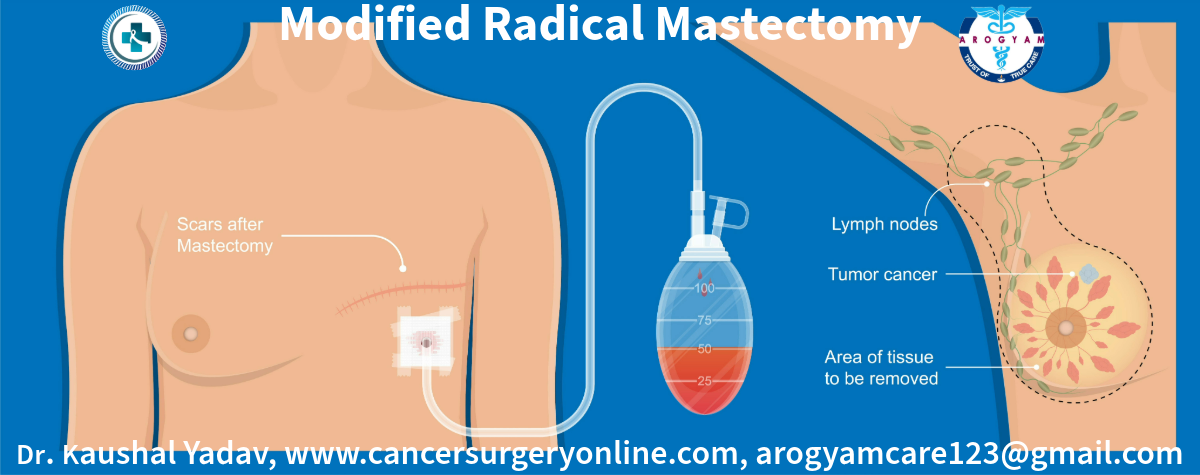
Modified radical Mastectomy
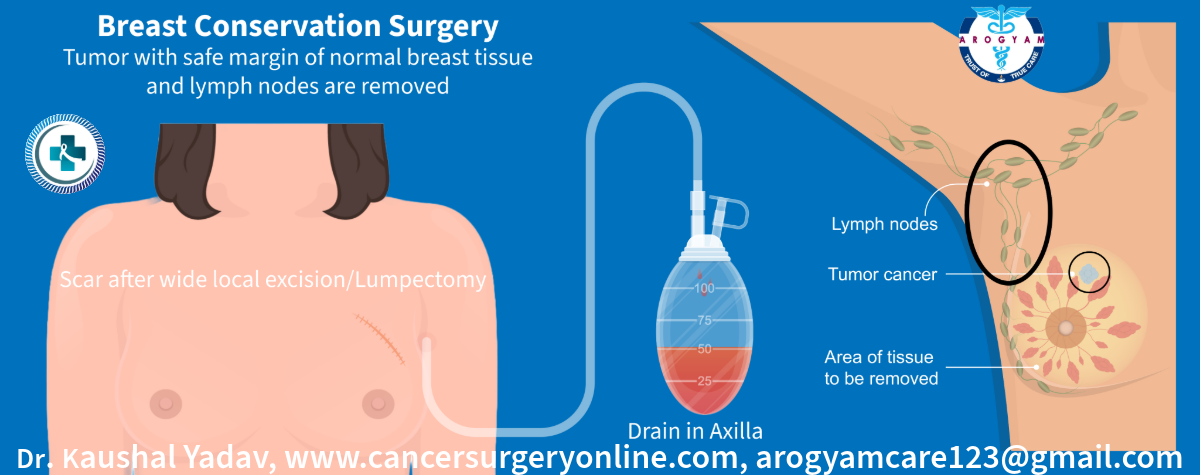
Breast Conservation Surgery
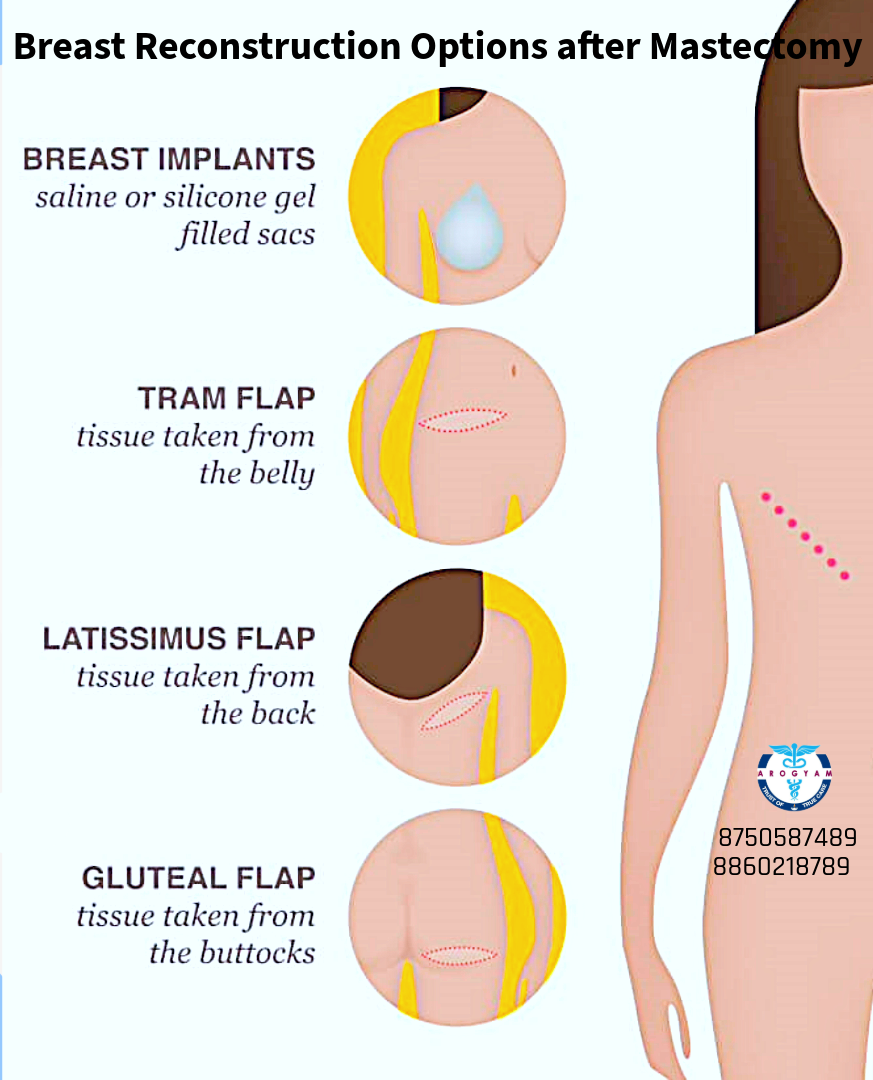
Multimodality treatment: chemotherapy, hormone, targeted and radiation therapy
Chemotherapy: Chemotherapy is used for three main purposes:
Adjuvant therapy: given after surgery to lower the chance of the cancer returning.
Neo-adjuvant therapy: given before surgery in locally advanced disease to treat micrometastases and shrink the tumour.
Palliative therapy: in metastatic disease, when the cancer has spread to other parts of the body, treatment aims to control the disease and relieve symptoms.
Hormone therapy: used in hormone receptor-positive cancers (ER+ / PR+).
Targeted therapy: used when the cancer has specific targets, such as HER2-positive disease.
Radiation therapy: given after breast conservation surgery and, in selected cases, after mastectomy.
The combination and order of treatments depend on the stage and biology of the cancer and are decided by the treating team (source: NCCN Guidelines).[4]
Related reading
- Detecting breast cancer early: key signs and screening methods
- Understanding the stages of cancer
- Biopsy test for cancer
- Blood tests in cancer
- Breast cancer treatment: myths and facts
- Lumpectomy and mastectomy: choosing between the two operations
- Recent advances in breast cancer treatment
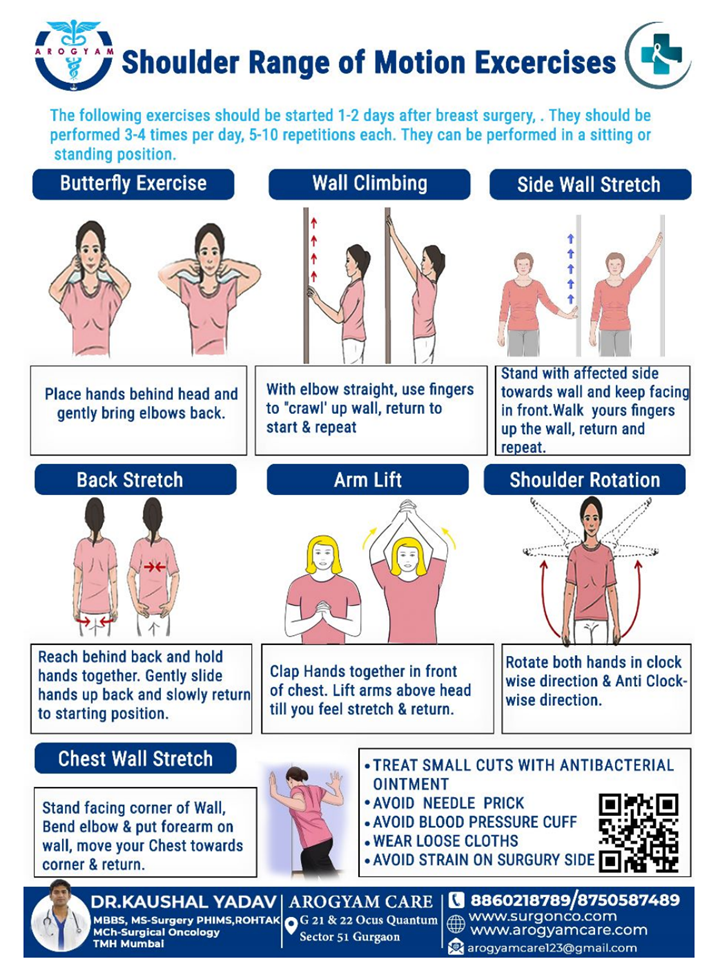
- Care after breast cancer surgery
- Follow-up after breast cancer treatment
- Breast cancer awareness
References
Bibliographic details for items 1, 5, 6 and 7 were retrieved from PubMed.
- Bray F, Laversanne M, Sung H, et al. Global cancer statistics 2022: GLOBOCAN estimates of incidence and mortality worldwide for 36 cancers in 185 countries. CA Cancer J Clin. 2024;74(3):229-263. doi:10.3322/caac.21834
- World Health Organization. Breast cancer (fact sheet, updated 3 July 2026). who.int
- Indian Council of Medical Research. Consensus document for management of breast cancer. ICMR, 2016. icmr.gov.in
- National Comprehensive Cancer Network. NCCN Clinical Practice Guidelines in Oncology (NCCN Guidelines): Breast Cancer, current version. nccn.org
- Oeffinger KC, Fontham ETH, Etzioni R, et al. Breast cancer screening for women at average risk: 2015 guideline update from the American Cancer Society. JAMA. 2015;314(15):1599-1614. doi:10.1001/jama.2015.12783
- Fisher B, Anderson S, Bryant J, et al. Twenty-year follow-up of a randomized trial comparing total mastectomy, lumpectomy, and lumpectomy plus irradiation for the treatment of invasive breast cancer. N Engl J Med. 2002;347(16):1233-1241. doi:10.1056/NEJMoa022152
- Veronesi U, Cascinelli N, Mariani L, et al. Twenty-year follow-up of a randomized study comparing breast-conserving surgery with radical mastectomy for early breast cancer. N Engl J Med. 2002;347(16):1227-1232. doi:10.1056/NEJMoa020989
This page is for education only. It is not personal medical advice and does not replace advice from your own doctor.
Related Video
Frequently asked questions
Most common age group for breast cancer is >50 years. In recent time half of case are being diagnosed in < 50 years. Age group 30-40 years is also having higher numbers. So breast cancer can develop in young age also.
- If all relavant examination and investigations has been done than plan of treatment is finalized with breast cancer surgeon
- After deciding surgical procedure cost estimate can be taken from billing department or hospital. Clinic or hospital department coordinator will assist in case any help required. +918750587489,
- you can do mammography screening as advised in our screening section or you can read various society guidelines like American cancer society, USPTF.
- you should be aware of early signs of breast cancer and breast self examination.
- You can consult us through our online consultation link. https://api.whatsapp.com/send/?phone=918750587489&text=I+am+Looking+for+an+appointment+with+Dr.+Kaushal+Yadav.+Please+Help&type=phone_number&app_absent=0
Whether surgery should be done first or chemotherapy should be done first, it depends upon the stage of presentation of patient. In stage I and II usually surgery is done first and in stage III or advance disease chemotherapy is done first.
Both breast conservation surgery and modified radical mastectomy have similar cure rate and no difference in recurrence risk. Patients suitable for breast conservation surgery should be selected properly. It is compulsory to receive radiation therapy along with breast conservation surgery but in case of modified radical mastectomy requirement of radiation therapy is decided after final histopathology report and pathological stage of the disease. Contact Dr Kaushal Yadav for Cancer Surgery & for colon and rectal cancer treatment in Gurgaon, Delhi-NCR, India
In very early stage 1 patients with positive hormone receptor status and negative lymph node, it may be possible to avoid chemotherapy. Certain test are available to know the recurrence risk of breast cancer which can be done in this stage to decide regarding adjuvant chemotherapy. These tests include Oncotype Dx, Endopredict, CanAssist Breast.
